
HFM Markets Indonesia Akses Trading Forex CFD dan Komoditas
Akses pasar global melalui HFM Indonesia dengan dukungan MetaTrader MT4 & MT5, berbagai instrumen trading, dan fitur yang mudah digunakan.
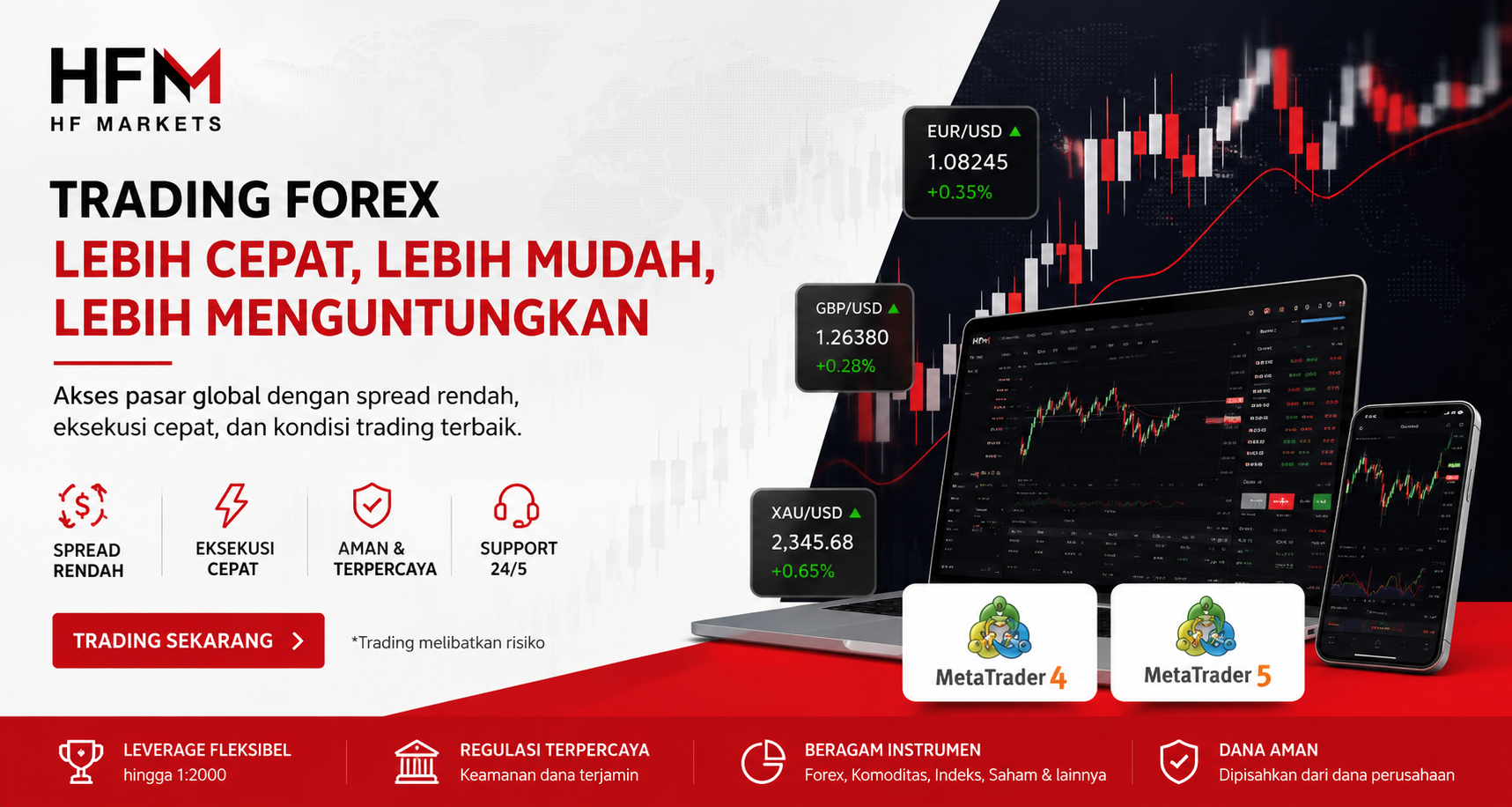
Fitur Utama HFM Indonesia
HFM Indonesia profesional untuk website trading forex dengan tampilan bersih, cepat, responsif, menampilkan chart market, jenis akun, platform MetaTrader MT4 & MT5, serta informasi risiko.
Forex & CFD
Tampilkan informasi instrumen forex, logam, indeks, energi, saham, dan komoditas.
Eksekusi Cepat
Bagian promosi untuk pengalaman trading stabil, cepat, dan mudah digunakan.
Tools Analisa
Tambahkan kalender ekonomi, kalkulator trading, berita pasar, dan analisa teknikal.
Mobile Friendly
Desain responsif untuk desktop, tablet, dan smartphone dengan loading ringan.
Fitur Jenis Akun
Empat kartu akun trading yang bisa disesuaikan dengan kebutuhan website Anda.
MetaTrader MT4 & MT5
Bagian khusus platform trading yang mudah dipahami pengunjung.
MetaTrader 4
MT4 dikenal sebagai platform klasik untuk trading forex, charting, indikator teknikal, Expert Advisor, dan eksekusi order yang praktis.
MetaTrader 5
MT5 mendukung multi-asset trading, time frame lebih lengkap, kalender ekonomi, depth of market, serta fitur analisa modern.
Perbandingan Singkat
Tabel informasi untuk membantu pengunjung memilih akun dan platform.
| Fitur | Cent | Premium | Zero | Pro |
|---|---|---|---|---|
| Target Pengguna | Pemula | Umum | Aktif | Profesional |
| Platform | MT4/MT5 | MT4/MT5 | MT4/MT5 | MT5 |
| Keunggulan | Belajar risiko | Fleksibel | Spread rendah | Tools lanjutan |
| Cocok Untuk | Latihan | Trading harian | Scalping | Strategi serius |
FAQ HFM Indonesia
Temukan jawaban atas berbagai pertanyaan seputar trading forex, platform MetaTrader, jenis akun, serta layanan yang tersedia di HFM Markets.
Apa itu HFM Indonesia?
HFM Indonesia adalah platform trading online yang menyediakan akses ke berbagai instrumen pasar global melalui teknologi trading modern dan antarmuka yang mudah digunakan.
Jenis akun apa saja yang tersedia?
HFM Indonesia menyediakan beberapa pilihan akun, seperti Cent, Premium, Zero, dan Pro, yang dirancang untuk berbagai kebutuhan trader.
Apa itu MT4?
MT4 adalah platform trading populer untuk charting, indikator, order trading, dan Expert Advisor.
Apa itu MT5?
MT5 adalah platform multi-asset dengan fitur modern seperti kalender ekonomi, time frame tambahan, dan tools analisa lebih lengkap.
Siap Mulai Trading dengan Platform Modern?
HFM Markets menghadirkan pengalaman trading forex yang modern melalui platform MetaTrader MT4 & MT5, pilihan akun yang fleksibel, serta berbagai tools analisa untuk membantu aktivitas trading Anda.
Daftar Sekarang